Cartels, Crisis, and Kids.
In Case You Missed It
Our First Border Trip.
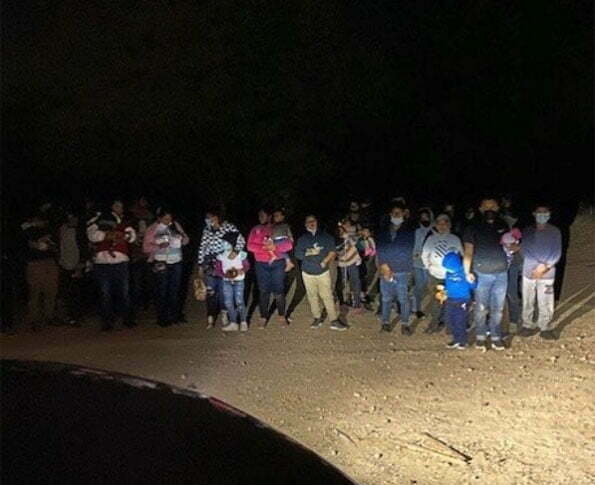
Recently, All Things Possible Ministries spent time on the U.S. southern border of Texas and Mexico to experience the situation firsthand. Our team visited the Rio Grande River Valley with McAllen as the most well-known city in the area. An incredible number of migrants are being pushed through this stretch of land, and drugs are mixed in with the chaos. This is a logical choice for cartels to exploit.
This relatively small stretch of land near McAllen, Texas is “ground zero”.
All Things Possible Ministries
The Latest From The Border.
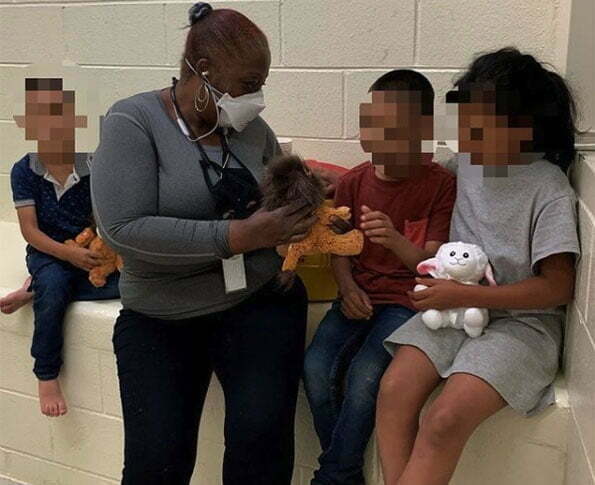
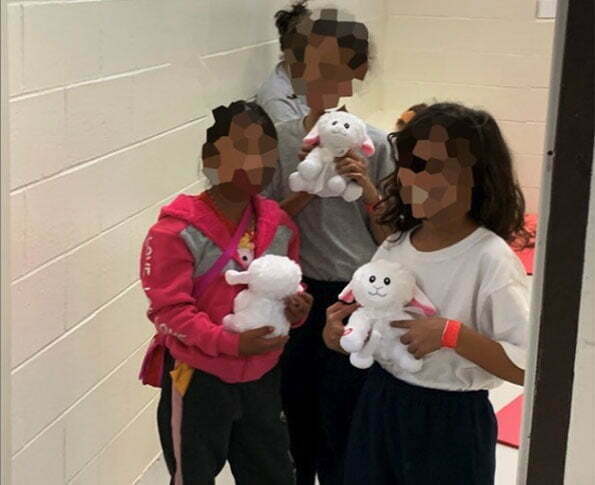
All Things Possible Ministries returned to the U.S. southern border of Texas and Mexico to assess the situation since our last visit. ATP continues to send Lions and Lambs to get distributed at the border. We continue to support the men and women of the Texas National Guard protecting the border on our behalf, and we continue to explore where ATP is best suited to intervene in this crisis. Our last trip focused on the McAllen, Texas area of the Rio Grande River Valley.
This time we focused on the Del Rio Sector further north.
Problems.
Drug consumption in the U.S. continues to skyrocket. The Mexican Drug Cartels are more than happy to feed the demand.
Many asylum claims lack credibility. So many of the migrants have been claiming asylum but the situations that they are leaving do not meet the requirements for asylum. With current events in Haiti, Cuba, and Venezuela, there may be more credence for asylum claims for migrants coming from those countries. This will only exacerbate things and provide more cover for the cartels to move drugs.
Solutions.
Supporting state efforts over federal solutions. ATP has little to no confidence in a federal solution under the Biden Administration, given its willingness to meaningfully address this problem, let alone solve it. Our support is behind Texas and the other states that are dealing with this challenge while being impeded at the federal level each step of the way.
Addressing solutions before migrants get to the U.S.. We are exploring ways where we are best suited to influence the situation. ATP operates like a Special Operations unit. We are agile and efficient and can move forward into difficult environments to offer hope, healing, and lasting change. We are leaning toward addressing solutions before the migrants get to the U.S. With this administration, once they are on U.S. soil, our hands are tied with what we can do. We will talk more about our vision and mission later in this update.

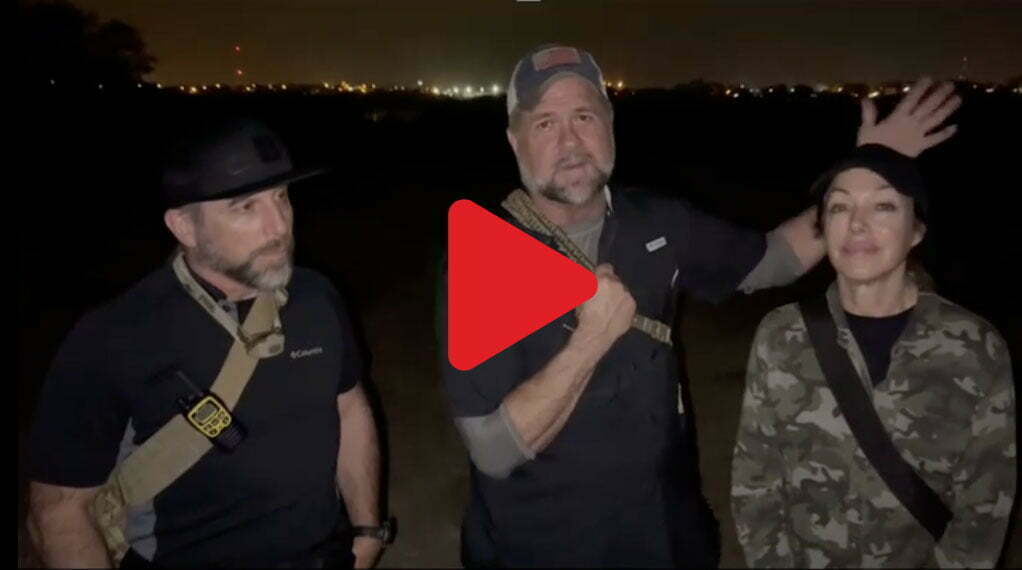
A Video Update From Chaz.
Important Trip FAQ’s
Your Questions, Answered.
On this latest trip, we set out to see if anything has improved and to answer a series of questions. You can see below that things are simply getting worse.
It’s worse. The tension between state and federal entities is even more strained. The drug trade is in overdrive. As we’ve reported earlier, the preponderance of the drugs are coming through Points of Entry and the recent focus has been on Del Rio sector.
In Del Rio we are seeing a lot more Cubans, Haitians, and Venezuelans. We are still seeing a consistent flow of Special Interest Migrants. The term Special Interest Migrant is a non-U.S. person who, based on an analysis of travel patterns, potentially poses a national security risk to the United States or its interests. Special Interest Migrants are people that come from one of 35 designated countries that have a history of extremist or terrorist activity. These include countries like Somalia, Afghanistan, China, Iran, Turkey, and Pakistan.
Because the Biden Administration has no clear policy and has largely stripped Border Protection and Customs from viable ways to control our border, loopholes have been the way of doing business. This was true even during the Trump Administration because of the Democrat resistance to support anything Trump did, including border security.
Theft in Del Rio Sector is high. Landowners are being forced to hire private security to protect themselves and their property because the DPS numbers are not sufficient. These private security personnel are routinely running into armed cartel members moving drugs.
The young men and women interviewed remain dedicated. Their morale is high, and they are proud to be involved in bolstering the physical border in the Del Rio sector. We can’t thank them enough.
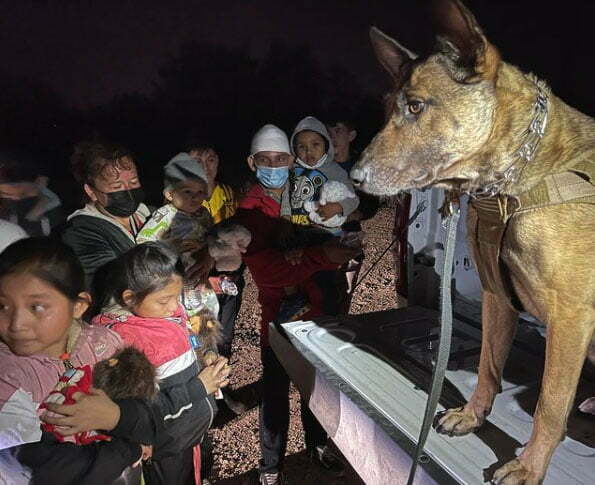
We continue to see groups of kids with males. We fear that these kids are being used as decoys to move drugs and, at worst, being trafficked into the U.S.
People we interviewed told us that there are civilian charter planes landing at Laughlin AFB and picking up migrants and moving them to the interior of the U.S.
ATP personally witnessed masses of migrants being moved through public airports, but we have not heard anything about the private charter planes.
Who is behind this? Where is the media reporting on this? Who is chartering these planes? With who’s funding? Where are these migrants being taken to?
We are not sure if ATP will be able to answer all of these questions, but we are certainly asking them.
Plain and simple, people are dying in the heat. Also, there has been a lot of rain in Central America, where this journey often begins, and more people are drowning in their attempt to reach the US.
Title 42 is one of these loopholes that has been in place for a few years as a last resort to stem the flow of illegal migrants.
Title 42 is part of U.S. health law, specifically Section 262 of U.S. Code Title 42 which prohibits entry into the United States when the Director for Disease Control believes “there is a serious danger to the introduction of [a communicable] disease into the United States.” Essentially, depending on the health situation, the U.S. is able to prohibit entry to anyone except U.S. citizens, lawful permanent residents, and their spouses and children.
When the COVID-19 pandemic escalated globally, the Department of Health and Human Services decided to implement and enforce this regulation on March 20, 2020. Thousands of asylum seekers that made the treacherous journey to the border, were turned away from accessing the legal system.
President Biden is poised to revoke Title 42, one of the last policies that remain in place to protect our border. The one legal backstop that is still in place to limit the asylum seeker claims is about to be dissolved.
The men and women we interviewed are completely burned out. They are overwhelmed with the scale of the problem and underwhelmed by the support that they have been given by the federal government. Even with the constant interference by the federal government, we can’t thank the men and women of Border Patrol enough.
As we continue to learn more about this issue, we feel increasingly called to address it more directly in Central America, closer to its root causes. We have an upcoming trip planned to meet with the ATP team, which has been monitoring this situation for us in Mexico, Guatemala, and Panama.
Below is background information on the locations ATP is currently researching and will be visiting in the coming weeks. Each of these areas represents a strategic fit for ATP—sufficiently challenging that others are hesitant to engage, yet stable enough for us to operate effectively. They are complex and demanding environments, but also offer the potential for meaningful and sustainable impact. These are precisely the conditions in which we are best positioned to serve.
Tapachula, Mexico.
Tapachula, located at Mexico’s southernmost point along the Guatemalan border in Chiapas state, is a city of transients – filled with migrants from around the world waiting their turn to head north to the United States.
When migrants enter Mexico from Guatemala, they must register and receive a humanitarian visa before they are allowed to leave Chiapas state. This process usually takes around 3-4 months. During that time, they languish in Tapachula, sometimes sleeping on the street or in rented rooms where they are packed in with others paying $1-$3 per night for a bit of floor space.
Because of the shift in U.S. policy that favors single parents and pregnant women for entry into the U.S., there are now an inordinate number of young women with their babies sleeping on the streets of Tapachula.
They are increasingly being victimized by gangs of street thugs – robbed, beaten and raped.
Security.
Tapachula is a very dangerous city in terms of the threat of petty theft and robbery. The area near the Guatemalan border and the downtown square are heavily patrolled by Mexican national guard and police, but the city is full of desperate people. However, a trained and competent ATP team that can take care of themselves will not have problems.
Objective.
Our upcoming trip is intended for ATP to view the situation firsthand and explore plans to help the single mothers and pregnant women there. We are praying about a establishing a center where women could be safe, learn some new skills and maybe encourage them to return to their home countries.
Bajo Chiquito, Panama.
This small village is deep in the Darien Gap. This is a roadless jungle that forms the frontier between Colombia and Panama where thousands of migrants from more than 80 countries are trekking north bound for the United States. The gap represents the most dangerous and difficult part of their journey, and approximately 1 in 10 who enter the gap never make it out the other side.
After 6-10 days walking through this deadly wilderness, the first village they encounter in Panama is called Bajo Chiquito. It’s an Indian village from the Embera tribe and has no electricity or running water. There are about 400 full-time residents in the village, and at times over 1000 migrants clogging the dirt paths between thatch-roofed huts. The ditches run with raw sewage and the entire village is ripe for a cholera epidemic. The migrants arrive nearly dead – some even die after they get there. The local Indians resent the migrants, while at the same time profiting greatly from them by various means.
A very large percentage of the people coming through the gap are women and children at least half. Many children are dying for lack of basic medical care and from exposure to the elements. This is a critical situation that needs immediate intervention with medical supplies and a source of clean water, and longer term intervention to try and discourage people from making the journey through the gap.
And then I heard the voice of the Master: “Whom shall I send? Who will go for us?” I spoke up, “I’ll go. Send me!”
– Isaiah, 6:8
Support Our Work.
Support our continued work on the Southern U.S. Border.